


Blood Sugar Self-Monitoring: Italian National Health Service Rules 2026 — Complete Guide
Learn who is entitled to free blood glucose test strips in Italy, how to obtain them through the Italian National Health Service (SSN), and how to monitor your blood sugar correctly if you have Type 1 or Type 2 diabetes.
Last updated: March 15, 2026
Sources: Italian Ministry of Health, SID (Italian Society of Diabetology), AMD (Association of Diabetologists)
Why Self-Monitoring Is Essential
Home blood glucose monitoring allows people with diabetes to:
- Track how their blood sugar changes throughout the day
- Identify triggers such as meals, stress, exercise, or illness
- Prevent episodes of hypoglycemia and hyperglycemia
- Improve treatment decisions with their healthcare provider
Self-monitoring is not self-treatment. It is an essential tool for actively collaborating with your doctor.
Benefits of Regular Monitoring
- Helps prevent dangerous low and high blood sugar episodes
- Improves HbA1c control (target generally below 7%)
- Can reduce hospitalizations by 20–30%
📊 Key Statistic: Approximately 3.7 million people in Italy are living with diabetes. Regular self-monitoring saves lives.
Who Can Prescribe and Authorize Free Test Strips?
Only an SSN diabetologist working in an authorized Diabetes Center can issue the prescription and authorization for free supplies.
Patients with the exemption code 013 – Diabetes Mellitus may receive:
- Blood glucose test strips
- Sterile lancets
- Other approved diabetes supplies
Authorization Details
- Validity: 12 months
- Collection frequency: Every 2–3 months at participating pharmacies
- Additional prescription: Not required once authorization is active
- Delegation: Family members may collect supplies on the patient’s behalf
Who Is Eligible for Free Test Strips Through the SSN?
The quantity of strips provided depends on the type of diabetes and treatment plan.
| Category | Therapy | Monthly Test Strips (Approximate) |
|---|---|---|
| Type 1 Diabetes | Intensive insulin therapy (4+ injections/day) | 100–250 |
| Type 2 Diabetes | Insulin only | 50–150 |
| Type 2 Diabetes | Insulin + oral medications | 25–90 |
Lancets are typically supplied in a 1:1 ratio with test strips.
The exact quantity is determined by your diabetologist based on clinical need.
Who Is Generally Not Eligible?
Free test strips are usually not provided routinely to people with:
- Type 2 diabetes managed only with diet and exercise
- Type 2 diabetes treated solely with metformin
- Stable patients using GLP-1 receptor agonists
- Stable patients on glitazones
- Patients without a risk of hypoglycemia
Possible Exceptions
Eligibility may still be considered in special situations, including:
- Gestational diabetes
- Post-bariatric surgery
- Significant blood sugar variability
Final approval is always based on the diabetologist’s clinical judgment.
Recommended Testing Frequency
The number and timing of blood glucose checks vary depending on therapy.
| Therapy | Suggested Testing Times | Weekly Frequency |
|---|---|---|
| Type 1 Diabetes (Intensive Insulin) | Fasting, before and after each meal, bedtime | 28–42 tests/week |
| Type 2 Diabetes on Insulin | Fasting and after dinner | 7–14 tests/week |
Always Record
For each reading, note:
- Blood glucose value
- Date and time
- Relevant context (meal, exercise, symptoms, stress)
Share this information with your doctor during follow-up visits.
How to Measure Blood Sugar Correctly
Follow these steps for accurate results:
1. Wash Your Hands
Use warm water and soap. Dry thoroughly.
Avoid alcohol-based gels, which may alter the reading.
2. Prepare the Meter
Insert a valid test strip and ensure the device is ready.
3. Lance the Side of Your Finger
Use a new sterile lancet for each test.
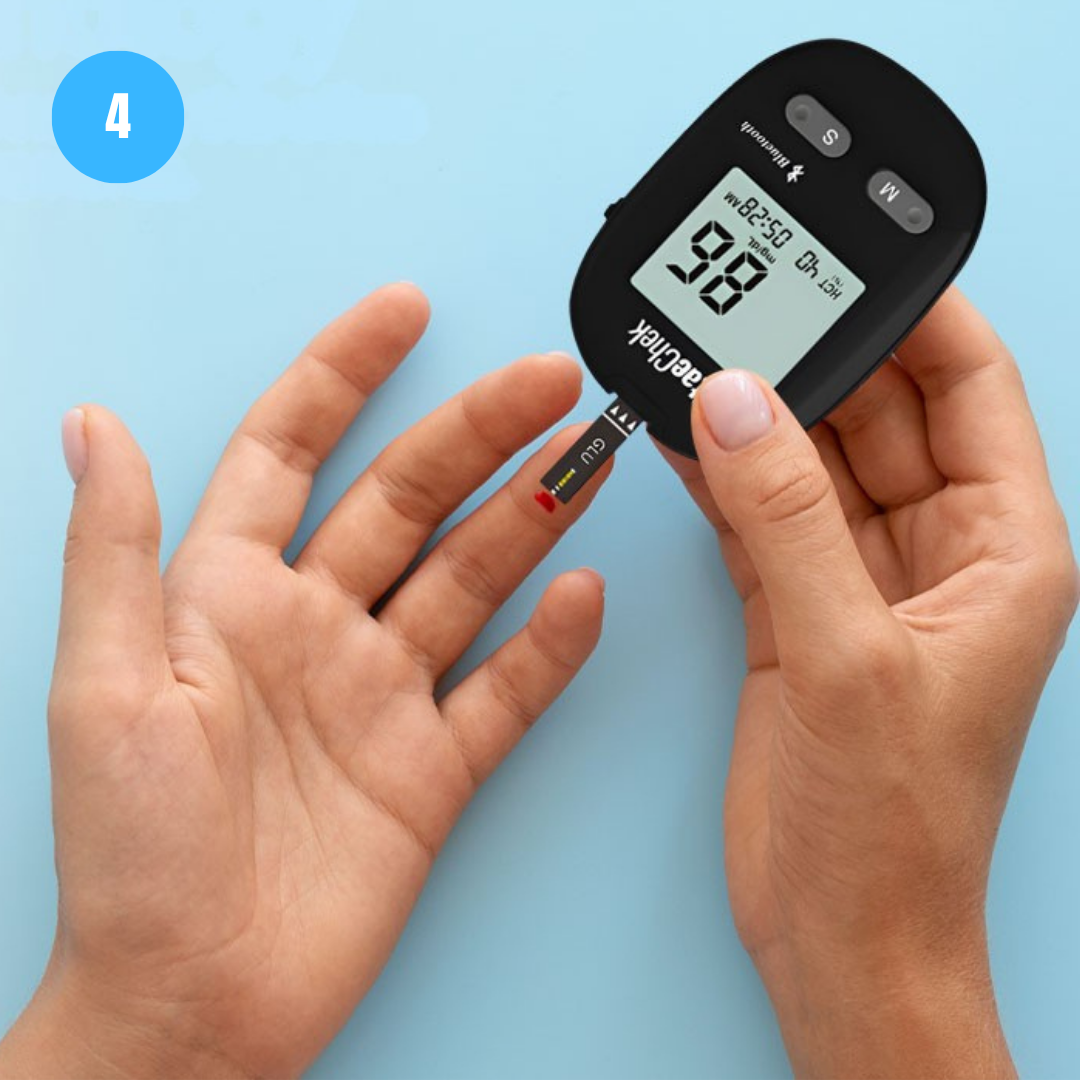
4. Apply a Small Blood Sample
Most modern meters require only 1–2 microliters of blood.
5. Wait for the Result
Results typically appear within 5 seconds.
6. Record the Reading
Save the result in your app or logbook.
7. Clean and Store the Device
Keep your meter and supplies in a dry, protected case.
Common Mistakes to Avoid
Incorrect technique can significantly affect results.
Frequent Errors
- Testing with dirty hands
- Using expired or humid test strips
- Reusing lancets
- Testing with a low battery
- Applying too little blood
⚠️ Important: Dirty hands alone can alter readings by up to 20%.
The Benefits of a Connected Glucose Meter
Bluetooth-enabled glucose meters, such as the VitaeChek G1 Pro, make daily monitoring easier by automatically syncing results to your smartphone.
Features include:
- Automatic Bluetooth data transfer
- 7, 14, 30, and 90-day history
- Trend charts
- One-tap PDF reports for your doctor
This eliminates manual note-taking and helps you keep your diabetes data organized.
Conclusion
Blood sugar self-monitoring is one of the most effective tools for managing diabetes and preventing complications.
If you are eligible through the Italian National Health Service, you may be entitled to receive free test strips and lancets.
By combining proper technique with a reliable meter, you can take a more active role in your health and make better-informed decisions with your doctor.
💙 Consistent monitoring leads to greater confidence, better control, and peace of mind.
💉 VitaeChek G1 Pro Glucose Meter — For Everyone!
Without an SSN? Choose the G1 Pro: 5-second results, app sync, CE Medical accuracy.
- Kit: Glucometer + 50 strips + lancets (~€49)
-
Free 48h shipping -
Ideal type 2 non-insulinized
📥 Free VitaeChek Resources
Download our practical tools to help you monitor your blood sugar and stay organized between doctor visits.
- 📄 90-Day Blood Sugar Log (PDF)
- 🩺 SSN Doctor Appointment Checklist (PDF)
- 📊 Blood Sugar Reference Values Chart (PDF)
Sources: Italian Ministry of Health, SID/AMD, AUSL Parma, and Italian National Health Service (SSN) guidelines for 2026.
Medical review: March 2026.
Have questions? Leave a comment below or contact us at info@vitaechek.com.
Share: