


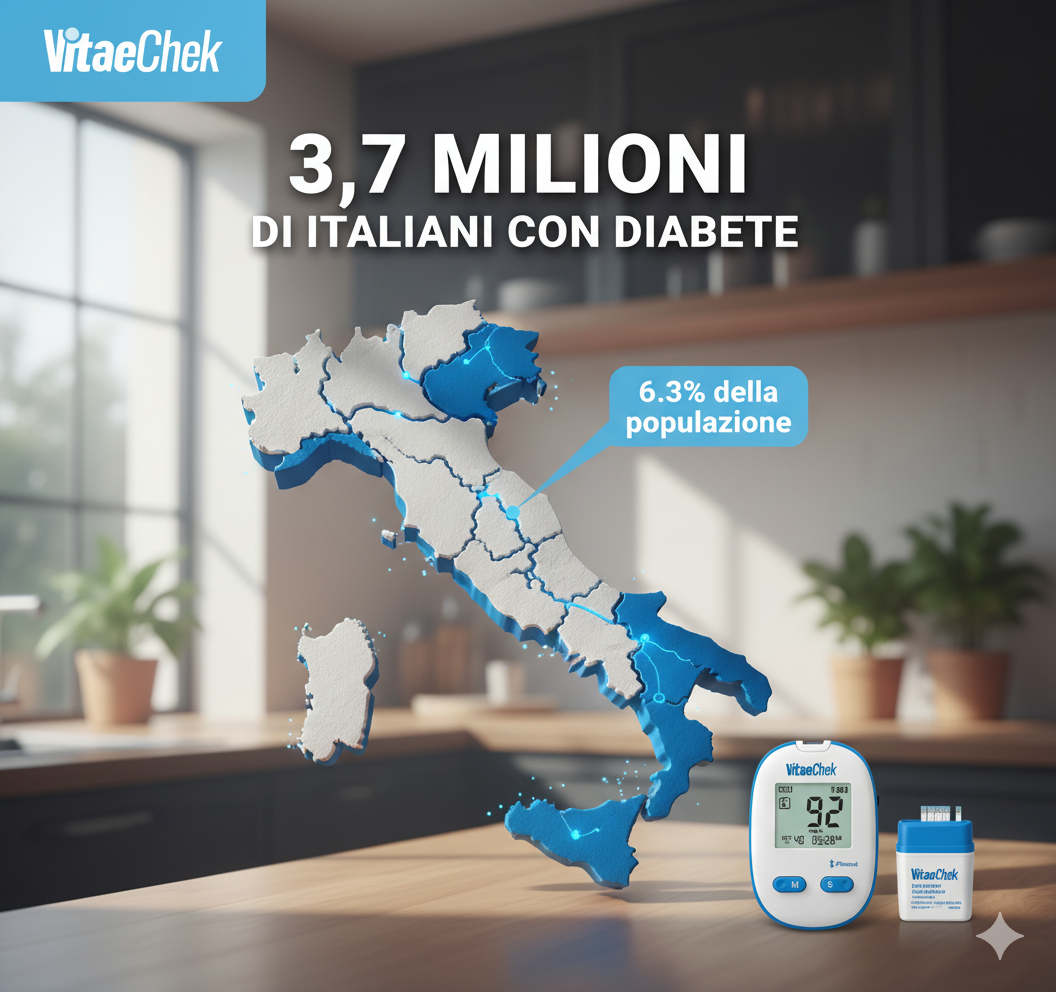
In Italy, approximately one in sixteen people is living with diabetes—and many are still unaware they have it. Discover the latest figures, the warning signs you should never ignore, and how home blood sugar monitoring can make a life-changing difference.
At this very moment, as you read these words, 3.7 million people in Italy are living with diabetes. That represents 6.3% of the total population and 7.7% of adults.
This is far more than a statistic.
Behind every number is a person managing a silent condition that often goes undiagnosed for years. Over time, uncontrolled diabetes can damage the heart, kidneys, eyes, and nerves—sometimes without obvious symptoms until complications have already developed.
The good news is that early detection and regular monitoring can help you take control and protect your long-term health.

The most concerning part? A significant proportion of cases remain undiagnosed.
Type 2 diabetes—which accounts for about 90% of all diabetes cases in Italy—can remain silent for years while gradually damaging the body.
The good news is that when diabetes is detected early and monitored consistently, it can be managed effectively. And today, checking your blood sugar no longer requires a trip to the laboratory. It takes just a few seconds, a reliable glucose meter, and a commitment to taking care of yourself.
In this guide, you’ll discover:
- Updated diabetes statistics for Italy
- Symptoms to watch for
- Blood sugar values you should know
- How to monitor your blood sugar safely at home
- Practical prevention tips
- How the VitaeChek G1 Pro can simplify daily testing
Diabetes in Italy: The Numbers Everyone Should Know
Data presented at the Italian Barometer Diabetes Forum 2025 highlight a growing public health challenge.
Key Statistics
- 3.7 million people in Italy have a diagnosed form of diabetes.
- The actual number is likely higher when undiagnosed cases are included.
- Nearly 4 million cases were reported in ISTAT surveys.
- Men now have a higher prevalence than women in every age group.
- Diabetes prevalence has increased by 27% compared with the early 2000s.
Risk Increases with Age
- 15.5% of adults aged 65–74 have diabetes.
- More than 20% of adults over 85 are affected.
Future Projections
According to the International Diabetes Federation:
- By 2040, 1 in 10 people in Italy may have diabetes.
- By 2045, 783 million adults worldwide may be living with diabetes.
Economic and Health Impact
- Diabetes costs Italy more than €20 billion per year.
- Approximately €9 billion are direct healthcare costs.
- Poorly controlled diabetes can reduce life expectancy by 7–8 years.
What Is Diabetes?
Diabetes mellitus is a chronic metabolic disorder characterized by high blood sugar levels caused by a problem with insulin production or insulin action.
Insulin is the hormone that helps glucose move from the bloodstream into your cells to be used as energy.
When insulin is lacking or ineffective, glucose remains in the blood and gradually damages tissues and organs.
Type 1 vs Type 2 Diabetes
| Characteristic | Type 1 Diabetes | Type 2 Diabetes |
|---|---|---|
| Cause | Autoimmune destruction of insulin-producing cells | Progressive insulin resistance |
| Typical age at onset | Childhood or young adulthood | Usually over age 45 |
| Percentage of cases in Italy | ~10% | ~90% |
| Treatment | Insulin required | Lifestyle changes, oral medications, sometimes insulin |
| Preventable | No | Often preventable |
Type 2 diabetes is the most common and the most preventable form of diabetes.
8 Early Symptoms You Should Not Ignore
- Excessive thirst
- Frequent urination, especially at night
- Unexplained fatigue
- Blurred vision
- Slow wound healing
- Tingling or numbness in hands and feet
- Persistent hunger
- Frequent infections (urinary, skin, or yeast infections)
Seek Immediate Medical Attention If You Experience
- Confusion
- Vomiting
- Rapid breathing
- Fruity-smelling breath
- Loss of consciousness
These may be signs of diabetic ketoacidosis, a medical emergency.
Blood Sugar Values: What the Numbers Mean
| Test | Normal | Prediabetes | Diabetes |
|---|---|---|---|
| Fasting blood glucose | < 100 mg/dL | 100–125 mg/dL | ≥ 126 mg/dL |
| HbA1c | < 5.7% | 5.7–6.4% | ≥ 6.5% |
| 2-hour OGTT | < 140 mg/dL | 140–199 mg/dL | ≥ 200 mg/dL |
💡 A single high reading does not confirm diabetes. Diagnosis should always be discussed with your doctor.
Why Home Blood Sugar Monitoring Makes a Difference
Regular self-monitoring helps you:
- Understand how food affects your blood sugar
- Track long-term trends
- Detect abnormalities early
- Support treatment decisions with your doctor
- Reduce the risk of complications
- Stay motivated with real-time feedback
Modern glucose meters make the process fast, accurate, and simple.
VitaeChek G1 Pro: Blood Sugar Testing in Seconds
The VitaeChek G1 Pro was designed to make home monitoring accurate, effortless, and convenient.
Key Features
- ⏱️ Results in seconds
- 🩸 Requires only 0.6 µL of blood
- 🎯 Laboratory-level accuracy
- 📡 Bluetooth 5.0 connectivity
- 📊 Stores up to 360 readings
- 📈 7, 14, 30, and 90-day averages
- 🔋 Long battery life
- 👓 Large backlit display
- 💉 Virtually painless lancing system
Included in the Kit
- G1 Pro glucose meter
- 50 test strips
- 50 sterile lancets
- Lancing device
- Travel case
How to Use the G1 Pro
- Wash and dry your hands.
- Insert a test strip.
- Lance the side of your fingertip.
- Apply a small drop of blood.
- Read the result.
- Sync automatically with the VitaeChek app.
The app displays trend charts and generates PDF reports you can share with your doctor.
Complications of Poorly Controlled Diabetes
Among people with diabetes in Italy:
- 1 in 5 develops diabetic retinopathy
- Nearly 40% show signs of kidney damage
- 1 in 6 has diagnosed coronary artery disease
- Every 7 minutes, a person with diabetes experiences a heart attack
- Every 90 minutes, a diabetes-related amputation occurs
The encouraging news is that many of these complications are preventable with consistent monitoring and proper treatment.
Lifestyle Changes That Reduce Risk
Clinical studies show that losing just 5–7% of body weight and completing 150 minutes of moderate exercise per week can reduce the risk of Type 2 diabetes by up to 58%.
Practical Steps You Can Take Today
- Reduce refined carbohydrates and sugary drinks
- Eat more fiber-rich foods
- Walk for 30 minutes daily
- Maintain a healthy weight
- Check your fasting blood sugar regularly
Who Should Test Their Blood Sugar?
You should consider checking your fasting blood sugar if:
- You are over 45 years old
- You are overweight or obese
- You have a family history of diabetes
- You had gestational diabetes
- You have high blood pressure or elevated triglycerides
- You feel unusually tired
- You previously had fasting glucose between 100 and 125 mg/dL
Start Today: Your Health Is in Your Hands
5 Key Takeaways
- 3.7 million people in Italy are living with diabetes.
- Many cases remain undiagnosed.
- Prediabetes can often be reversed.
- Home monitoring helps prevent complications.
- The VitaeChek G1 Pro makes testing quick and easy.
📥 Free Resources
- 📓 90-Day Blood Sugar Log
- 🥗 Glycemic Index Reference Chart
- 🩺 Diabetologist Appointment Checklist
🛒 Take Control in Seconds
The VitaeChek G1 Pro combines accuracy, Bluetooth connectivity, and ease of use to help you monitor your blood sugar with confidence.
Complete kit includes the meter, 50 test strips, and 50 lancets—ready to use straight out of the box.
Shop the G1 Pro at VitaeChek.com
Article prepared by the VitaeChek Editorial Team — March 2026.
Sources: Italian Barometer Diabetes Forum 2025, ISTAT, Italian Ministry of Health, AMD/SID Standards of Care, ISS Epicentro, International Diabetes Federation.
Share:
GDH vs. GOD: Which Technology for Your Glucose Meter? 2026 Guide
Blood sugar levels after 50: why monitoring them daily is the most important thing for your health.