



4. Glucosio Deidrogenasi (GDH): L'Evoluzione Moderna

4.1 How GDH Works and the Role of Cofactors (PQQ, FAD, NAD)
Glucose Dehydrogenase (GDH) is a family of enzymes that, unlike Glucose Oxidase (GOD), does not use oxygen as a co-reactant.
Instead, GDH transfers electrons through a cofactor such as:
- PQQ (Pyrroloquinoline Quinone) — older technology
- FAD (Flavin Adenine Dinucleotide) — the most widely used in modern glucose meters
- NAD (Nicotinamide Adenine Dinucleotide) — primarily used in laboratory applications
🔬 Simplified GDH Reaction Process
- The GDH enzyme binds to glucose.
- Glucose is converted into another chemical form.
- Electrons are transferred to the cofactor (FAD or PQQ), not to oxygen.
- The cofactor transfers electrons to a mediator.
- The mediator generates an electrical current.
- The meter converts this current into a blood glucose reading.
This oxygen-independent design greatly improves stability and consistency.
4.2 GDH vs GOD: Side-by-Side Comparison
| Feature | Glucose Oxidase (GOD) | Glucose Dehydrogenase (GDH) |
|---|---|---|
| Oxygen dependence | High (oxygen is part of the reaction) | None |
| Accuracy at high altitude | May decrease | Remains stable |
| Test strip stability | More sensitive to humidity and light | Greater long-term stability |
| Chemical interference | Vitamin C, acetaminophen | Very low (depends on cofactor) |
| Variable hematocrit handling | More susceptible to errors | More robust |
| Reaction time | Good | Often faster (5–10 seconds) |
5. Why GDH Offers Practical Advantages
5.1 Oxygen Independence: Reliable Anywhere
Blood oxygen levels can vary due to:
- High altitude
- COPD or asthma
- Intense physical exercise
- Cardiovascular disease
With GOD-based meters, these variations may affect readings.
With GDH-based meters:
- The signal remains more stable.
- Results are more consistent across environments.
- The risk of incorrect insulin dosing is reduced.
5.2 Better Performance with Variable Hematocrit
Hematocrit is the percentage of red blood cells in the blood.
Very low hematocrit (anemia) or very high hematocrit (dehydration, polycythemia) can affect test strip performance.
Modern GDH systems are designed to maintain accuracy across a broader hematocrit range, reducing systematic errors.
5.3 Faster Readings
GDH chemistry often enables rapid reaction times.
For users, this means:
- Results in 5–10 seconds
- Less time waiting with a blood sample
- Easier testing multiple times per day
6. GDH-PQQ vs GDH-FAD
6.1 The Historical Limitation of GDH-PQQ
Older GDH-PQQ systems were not completely specific to glucose.
They could also react with sugars such as:
- Maltose
- Galactose
- Xylose
⚠️ In certain clinical situations, this could lead to falsely elevated glucose readings and inappropriate insulin dosing.
6.2 Why GDH-FAD Is the Modern Standard
GDH-FAD was developed to eliminate these limitations.
💡 Advantages of GDH-FAD
- Highly specific to glucose
- Dramatically reduced interference
- Oxygen independent
- Compatible with ISO 15197:2013 accuracy standards
When evaluating a GDH-based glucose meter, verify that:
- The product explicitly states GDH-FAD
- Test strips are certified to current standards
- Known interferences are clearly listed in the instructions
7. When GDH-FAD Is Especially Recommended
7.1 Intensive Insulin Therapy
People who adjust insulin doses multiple times per day need readings that are:
- Accurate
- Repeatable
- Minimally affected by external factors
GDH-FAD provides an added margin of confidence.
7.2 Travelers, Athletes, and High-Altitude Workers
Ideal for people who:
- Trek in the Alps, Dolomites, or Himalayas
- Practice endurance sports
- Work above 2,000 meters
Because GDH-FAD does not rely on oxygen, readings remain consistent.
7.3 Respiratory or Cardiovascular Conditions
Patients with:
- COPD
- Chronic respiratory insufficiency
- Advanced heart disease
may experience fluctuating oxygen saturation levels.
GDH-FAD minimizes the impact of these changes.
8. How to Check Which Technology Your Meter Uses
Where to Look
Package Insert or Test Strip Instructions
Look for the section labeled “Test Principle.”
Examples:
- Glucose Oxidase
- Glucose Dehydrogenase (FAD)
Manufacturer Website
Check the “Technical Specifications” or “Measurement Method” section.
Ask Your Pharmacist or Diabetologist
Useful questions:
- “Does this meter use GOD or GDH-FAD?”
- “What hematocrit range is it validated for?”
💡 Important: If your current meter uses GOD or GDH-PQQ, it does not necessarily mean it is inaccurate. However, newer GDH-FAD systems may offer greater reliability in demanding conditions.
9. Frequently Asked Questions
Is a GOD-based meter inaccurate?
No. In standard conditions, GOD-based meters can be very accurate. They are simply more sensitive to oxygen and certain interferences.
Should I replace a GDH-PQQ meter immediately?
Not necessarily. However, if you receive maltose-containing treatments or your doctor recommends it, upgrading to GDH-FAD may be advisable.
Is GDH-FAD always better than GOD?
In terms of robustness under variable conditions, generally yes.
Will I notice different readings after switching?
Usually, differences fall within accepted tolerances. The greatest benefit of GDH-FAD is improved consistency when conditions are less than ideal.
10. Conclusion: Which Technology Should You Choose?
If you test only occasionally under standard conditions, a traditional GOD-based meter may be sufficient.
However, GDH-FAD is an excellent choice if you:
- Adjust insulin doses based on your readings
- Have respiratory or cardiovascular conditions
- Travel frequently
- Exercise intensely
- Want the most stable and reliable performance possible
For modern blood glucose monitoring, GDH-FAD represents one of the most advanced and dependable technologies available.
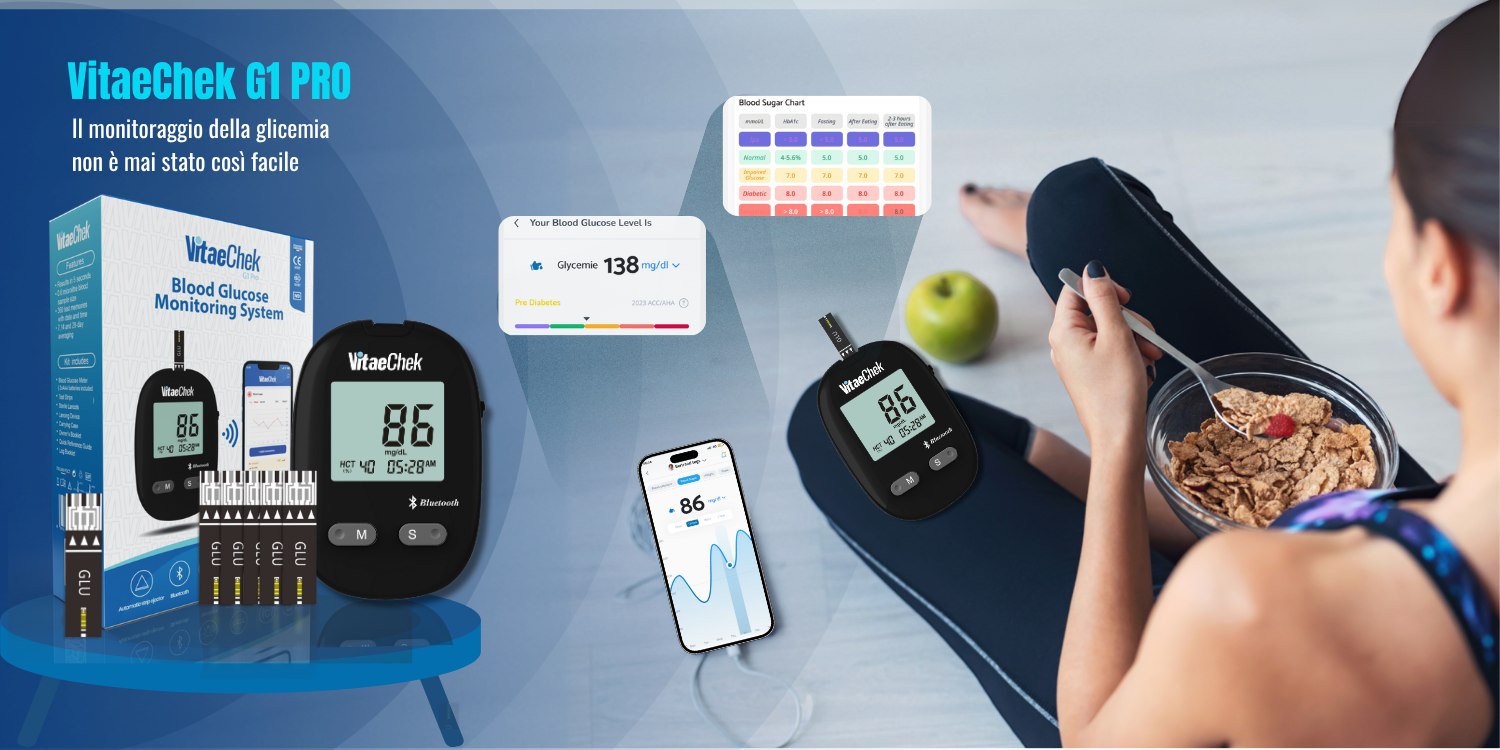
🩸 The VitaeChek G1 Pro Uses GDH-FAD Technology
The VitaeChek G1 Pro is equipped with next-generation GDH-FAD test strips, delivering:
- Complete independence from oxygen variations
- ISO 15197:2013 certified accuracy
- Reliable performance across a broad hematocrit range
- Results in just 5 seconds
- Minimal interference
- Automatic Bluetooth synchronization with the VitaeChek app
Included in the Complete Kit
- G1 Pro glucose meter
- 50 GDH-FAD test strips
- 50 sterile lancets
- Lancing device
- Travel case
Next Steps
- Check which enzyme technology your current meter uses.
- Compare it with modern GDH-FAD systems.
- Discuss with your diabetologist whether upgrading is appropriate.
- Explore our complete guide to Type 2 diabetes management.
📞 Have technical questions about glucose meters? Contact the VitaeChek support team—we’re here to help you choose the solution that best fits your needs.
Share:
How to Test Your Blood Sugar at Home - A Step-by-Step Guide
3.7 million Italians live with diabetes. Do you know that?